
Cirque de Verre
A Short Story

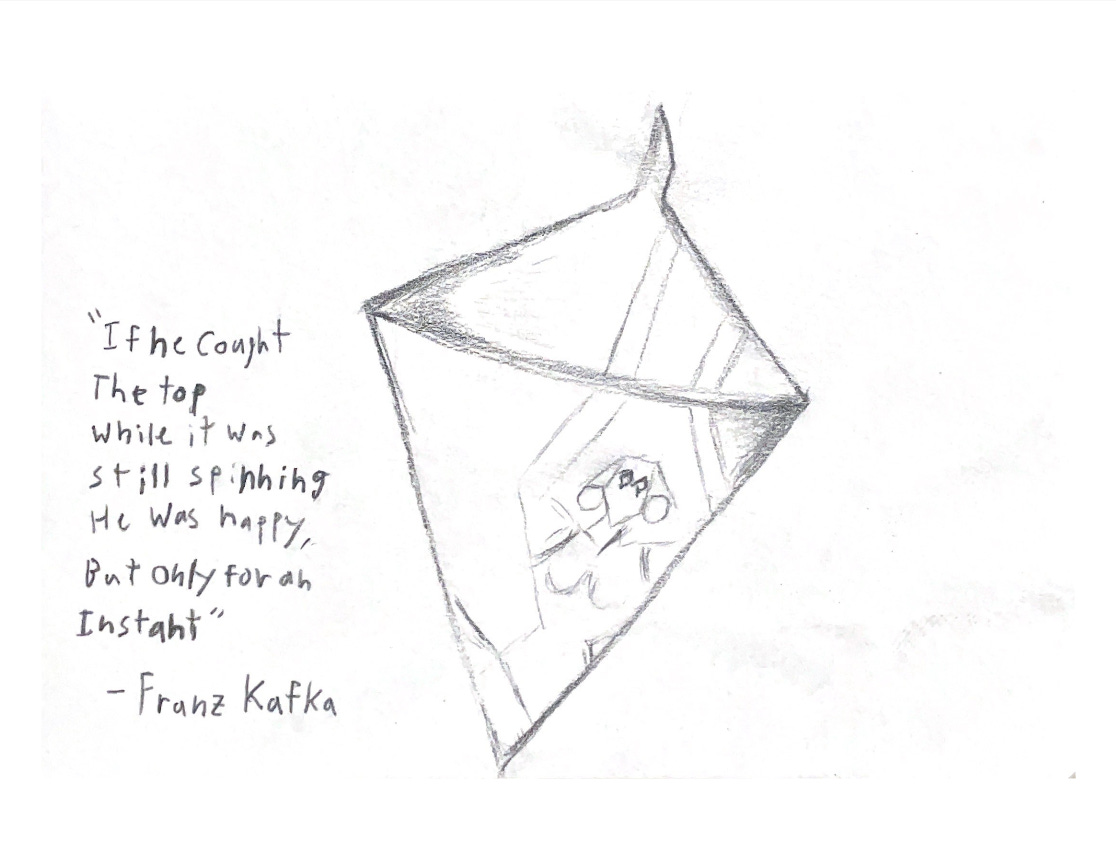
John leaned against the sink and felt for the vein running down the inside of his right thigh. The protuberant bulge pushing its way out of his thin skin was a steadying reminder of the strength in his legs. Corded fibers built during his rebellious youth spent running away from his father's upholstery business back in Chicago. As a boy, he had known every rooftop in Bridgeport and would hide in the soot filled chimneys to avoid work. He looked up at the mirror—steamed over. He wiped the fog off the glass with one powerful and trembling hand. The scolding shower was still running behind him, but John was shivering as water dripped out of his sodden brown hair and mustache.
On the rim of the sink, along with his straight razor and oversized leather wallet, was the watch his father had given him when he graduated from accounting school. German, like his father, it ticked 45 minutes until show time. John wondered why his father had not asked for the watch back when John had left the accounting job to open this circus. He took a deep breath. After tonight, the watch would be his again, this time in earnest.
John hated that his opening night, the first performance on his European tour, his chance to stand for himself, had to be in this city. Amsterdam—ringed by untraversable canals, layered like Dante said, a mapless maze, red lanterns lighting the streets at night. It was not the city pictured in his dreams. John reached through the falling deluge and turned off the shower, ignoring the sting of water that was too hot. He closed his eyes, daydreaming into the leftover silence.
He pictured Maria, spinning in her glass, white light refracting all around. For all their pointless fights and all her cruel apathy, there was nothing as alive as her eyes when she spun, seeming to levitate in defiance of gravity. Well, except for maybe their son.
John pictured him, Junior, flying—mop of blond hair and toothless grin. Tonight was going to be Juniors’ first-ever performance. He was only seven years old.
For all of John's strength, comfortability with performance, and drive to tell stories, he could not dance. The movements just didn't come to his legs in anything but awkward intentionality. Not only could Junior dance, but he could fly, no flight too high on his trapeze.
John pictured himself striding around the ring and could hear his words captivating the crowd. He peered into the audience and saw a pair of obsidian eyes wide with stern pride. His father, Juniors' grandfather, crew-cut short grey hair and sagging cheeks usually so devoid of laughter, clapped along with the crowd and smiled. John saw his father with creased lines around his eyes.
But Johns's father was still in Chicago. He would never entertain himself with something as futile as the circus. John exhaled the breath he had been holding and opened his eyes. His skin had dried in the air, but the mirror had fogged over again.
He tossed the towel over his tense left shoulder, pulled on his uncomfortably tight black and white boxers, and picked up the watch before opening the door to the dressing room. Steam followed him as he walked over to the mirror and makeup station labeled “Mr. Harshaft.” There, he found his costume, comb, and hair gel. He looked into this new, perfectly clear mirror, clenched his teeth, and strapped the watch over the pale tan line on his wrist.
—————
Maria watched Mr. Herrschaft analyze himself, standing in the dressing room mirror and waxing his mustache. Wide eyes steeled. Fading laugh lines drawn flat around the corners of his eyes. She watched as he contorted the corners of his brown whiskers into perfect spirals. Despite his age, the salt of white had yet to taint the hair on his youthful face and round head. He nodded, satisfied that the curls would hold, and began to wash his hands. Strong hands. Scarred hands. Remnants of work as a youth in his father's business, but also a youth of climbing rooftops. Maria had spent the last eight years holding those hands. “What kind of freedom is gained from holding a lover's hand?” Maria pondered in an inaudible whisper. She had a proclivity for soliloquy.
Maira had finished getting dressed and was watching, waiting for her husband to finish creasing the lines of his black tuxedo. She, too, wore black, though not by her choice. She had in mind a geometric rainbow—purple ribbons in her hair, a navy blue leotard, a bright orange shawl—the color of marigolds or maybe those poppies from California. Mr. Herrschaft had no interest in uncapturable colors or refracting light. She recalled that morning when she had asked him about it in their hotel bedroom.
The curtains, thick and stifling, were closed. “Well, darling, you need to be in the same costume as the whole troop, and anyway, your spinning is more graceful when you are all in black,” he replied.
She dashed to the window, ripped back the curtains, and opened the glass behind the fire escape. The room flooded with the sharp morning light. Without a word, she climbed onto the balcony and shut the window behind her. Below the wrought iron balcony bars lay Amsterdam’s Keizersgracht canal. She could taste the foggy salt in the air and feel the chill raising goosebumps on her skin.
“I want to dance for myself.” She muttered.
Down the canal to her left, she made out the two black heads and six linked chains of the Van Loon house crest behind a window pane. The Van Loon’s had found pride enough in their slaving empire to display their spoils as their sigil. There it stood, over half a century after emancipation in this endless city, behind a great glass window overlooking the canal.
“Painted chains are chains enough.” She said as she sank to the floor of the fire escape.
Her naked feet dangled in the air, free. She glimpsed a woman in last night’s red dress with disheveled blond hair, just like Maria’s, walking out of a hotel across the street. Maria watched the woman unlock a bike, toss one leg over the seat, and ride away– red and gold tendrils trailing behind her in the wind. When Maria looked back, she saw John had been watching her through the glass.
“I’m not doing it. I’m done with these chains. I’m going back to New York. I'll get my old job with the ballet. I’ll dance through first dates without ever letting someone hold my hand again. I want to fly,” she said to the city. It did not reply. Instead, she clambered back into the stuffy room, left her orange shawl in the closet, and got ready to dance.
Maira’s act had been the circus's inspiration. Cirque de verre. Circus of glass.
Each act revolved around glass—or rather, more often, flimsy translucent plastic masquerading as glass. As a child, Maria could never sit still. After she had graduated from chewing through shirt sleeves to biting her nails bloody, her father, a French glass manufacturer, had given her a glass top to distract her. When the top spun, the sunlight would refract through it and spray rainbows across the room. She took the top everywhere. She would spend hours looking at the colors, daydreaming.
Yet every time the top stopped, the weight of stillness would settle back onto her shoulders. So she found herself a dancer in the city—paid to sweat. In New York, she had been a ballerina. Famous for her capacity to spin, she could pirouette for hours on the same foot. Now, at 30, it was only when she was spinning that she still daydreamed.
John and Maria met at a storytelling night at a local Brooklyn bar. At the time, he was the top accountant for the biggest circus in North America, and she was a lonely dancer. The chance to tell someone else a story brought them together. John had dazzled the room with a tale of an all-night youthful adventure through the violent streets and abandoned rooftops of Chicago. Though the details of the story had faded, Maria still remembered the pillar of fire in his eyes, flitting between colors as if they were breathing.
When he sat down from the open mic, Maria told him the story of her childhood top. He was immediately enthralled. Ever the visionary, he had eventually asked her father to make a replica big enough to give Maria room to dance inside it. Her father had built the whole thing, even the trapdoor that allowed Maria to enter and exit, out of glass.
The tip of this massive toy was connected to a pulley system and a steam engine with mechanical controls that directed the spin. It was built on a slight hinge so that it would wobble as it slowed, but never fall. At the climax of the show, she would get into the hollow of the top and dance inside as it spun. The crowd would watch her through the glass until Mr. Herrschaft flipped a switch and stilled the top.
Maria nearly screamed when her husband's hulking blond strongman, Sam Steal, walked into the dressing room. “Hey boss, ma’am,” he nodded to each in turn. “Yall ready for the big opening night?” he said. “Why, of course. I am ready to take Europe by storm. This deprived city will be my warmup act.” Her husband practically shouted his response. She could feel John’s nervousness echoing through the room. The two men lit cigarettes and launched into a discussion of Albert Camus's “The Fall” and whether it depicted the city they were in, Amsterdam, with accuracy. They shared a passion for books. The fall. Tonight was an important evening not only because it was the first show of the circus's three-month tour in Europe but also because it was the first time Maria's son would perform on the trapeze.
She looked over to his empty corner of the Dressing room. Locker open. His yellow pet Canary, a gift from John, perched in its cage. She glanced at the clock: 30 minutes until show time. “John, I am going to find Junior.” She said. “Yes, go find him. He needs to be ready!” Her husband responded and turned right back to his debate with Sam. These debates, common between Sam and her husband, were aimless arguments meant only to flex intellectual vanity. Maria detested them. The puzzling thing was that she knew John did, too. They were the exact kind of conversation his father loved. John's father had been a German general in the Great War before moving his household to Chicago to start an upholstery business. A business he ran, like everything else in his life, with military discipline.
John had divulged during many intimate conversations in the twilight confides of their bed covers that he wished Sam and the men of his life would change—that he could wish away the broken beer bottles and oil-dripping Ford Model T’s.
There he stood. Mr. Hershaft. Comparing sizes with another strongman. Never able to unshackle himself, though he held all the keys. Now, married eight years, Mr. Herrschaft had his own circus, and Maria had become one of the characters in his stories, one of the hands on his watch. Except when she was spinning—then she appeared, free.
Maria buried her anxiety and told herself not to be worried about her son's performance. At age seven, he was the best trapeze artist in the troupe. The critics were going to call him a prodigy. She had watched him practice the exact routine he would be performing tonight hundreds of times. What bothered her was that she knew he didn't want to perform. Junior liked to roll around in the mud and wear flamboyant bright colors, not fly gracefully across an orderly room in a skin-tight colorless uniform.
“Who can blame him?” She wondered aloud.
She turned around the corner out of the tent toward the canals. Seven-year-olds live in daydreams. Maria stopped, leaned against the tent pole, and fixed her gaze. Rising wind breathing in her chest.
Junior had tied his favorite bright yellow blanket around his neck to act as a cape and was flapping it around, running in circles, and yapping. Junior had blond hair like hers but John's laughing eyes. Disproportionately large, barely blinking. It said blue on his passport but if you really looked at them, they never stayed the same. Green, yellow, grey, blue—depending on the light.
“Chrip!” he flapped his arms and jumped onto the stone wall overlooking the canal. He skipped, pattering feet gliding across the cobbles as he looked around, chirping in the dusk.
“Jonny Junior,” Maria beckoned, and he turned to his audience.
“Mom! Stop spying on me,” Jonny said, but his bashful cheeks turning red. “I can’t play if you are watching!”
“Jonny, It's time to come in and get up to your trapeze. How are you feeling about your first performance?” Maria knelt and picked at a stubborn piece of dirt on her son's nose.
“I don't want to be a trapeze artist. I want to be a bird.” Junior clung to his blanket. Knuckles white against the color of his would-be wings. If only he could—she wanted to cry.
“I know honey, but you can't fly with a blanket, and you know your father won't like it if you take it up there.”
The look of flabbergasted disappointment that slipped onto Junior's face was enough to make her look down. Black on black. Tight, framing against her breathing body.
“Ok, Jonny, you can take the blanket up to the nest. But only to keep warm before the performance.” She capitulated.
Delight. The fluttering dance of Junior’s feet. He was about to run off to the trapeze platform he called the “treetop” when he stopped, spun, and asked.
“Mommy? Why do people like to watch trapeze? Why can't I fly on the ground? Flying up high is scary.”
She stopped, and shame bore down on her, “I suppose that's why they like it. Because it's scary.” She said.
“Oh, that's not very nice,” Junior responded and skipped through the tent flap.
Maria had tried to teach Junior to be kind. But the world didn't like kindness. Maria felt unable to turn. Then she remembered the orange shawl hanging in her closet.
—————
And so the evening grew in rows around him. The couples marching round in orchestrated pairs. He pictured birds flying through the tent. He didn't care that they weren't really there. The seats from his treetop were a cascade of faces. Jonny, the canary, was going to fly. But first, his Mom would dance.
Jonny glimpsed Mr. Steal, Skin bulging like the intestine of a tremendous red sausage. Jonny sunk back, hidden from the gaze of the strongman. Sam liked to hit things. In his act, he put on gloves and punched through great big panes of glass. The crowds always cheered when the glass shattered. Jonny never stayed in the dressing room when Sam was there. When Sam hit people, he would tell them to tough up. Jonny didn't like to be hit.
It was a late show—9:00 o'clock start. Jonny thought Europeans ate dinner too late. He liked sitting at the dinner table and listening to the grown-ups chat about grown-up things. But he got sleepy at around 8:00 o'clock. He took his yellow blanket and rolled up into a cocoon. Propped up on his elbows, Jonny could see the whole stage from the top down.
The clowns juggled their glass vases. The contortionists fit into their glass boxes. The unicyclist's road over their glass panes. Sam smashed his windows. The crowd erupted. Jonny never saw the juggler, or contortionists, or unicycles, or shards of glass. He saw the birds flying in and out of the commotion below and listened to the calming drone of his Dad’s voice announcing each act. His Dad had on his best tuxedo—the one with the silver buttons. The crowd was consumed. Captivated by the mustache, the cane, and the glint in each blueish eye as he unveiled the narrative of the evening.
Jonny watched the great glass top rise out of a trap door in the stage. Inside, he could see his Mom dressed all in black. No, she had wings of her own. A yellow scarf wrapped around her shoulders. Jonny watched his father give the slightest shake of his head before sliding right back into telling the story. At his father's signal, Sam pulled a lever, and the top started to spin. So did she.
The spotlight reflected the burning scarf out into the eyes of the audience. Flickering. Mom wasn't shy. She spun. The top wobbled. She never did. Quite. The crowd stared. But no one stared like Jonny. Colors danced in his head even after he closed his eyes and slipped into a soothing slumber, wrapped in his folded yellow wings.
—————
John gave Sam the signal to stop the spinning. Four minutes on his watch. He resisted his own remorse and ignored Sam’s emerging grin as the top slowed. But John still felt the anger burning in his throat—let her dance all night. John watched Maria slow out of her spin, the look of exhilaration silhouetted on her face. She was right. He tore his gaze from the red scarf. He, Mr. Herrschaft, had a job to do.
“And now, for the final act of the evening,” he spun around slowly to face the whole audience.
“For the first time. The youngest, the most graceful, the highest flying trapeze act in the world. Watch as, at only seven years old, our very own John Herschaft Junior, the Canary, flies across the sky!”
Applause never affected John the way he had been taught it was supposed to—empty shouts and mechanical clattering. It was silence he sought. When everyone in the room was so lost, they couldn't consider what being found meant.
The spotlights swung around the exact mathematical pattern he had planned. Genaue. The light rested on the platform, on his son's treehouse.
Out of the embrace of a shining yellow vale, rubbing his eyes and brushing his disheveled hair back, Junior rose. Yawning—the gap in his front teeth parading his childhood into the eyes of the audience. He stood high above the circus, white spotlights pinning him to his perch.
He reached out and took hold of the wooden trapeze bar, two slackened ropes rising out of each side of the cylinder. The audience cheered, and the circus rumbled with apprehension. Everyone watched this child take a shaky breath. Then he jumped.
John could feel the wind on his son's face. John watched Junior’s golden hair trail behind him, twinkling as the spotlights followed the delighted figure, dancing across the sky. Junior flew, porcelain forehead glimmering, soul in his elbows, a puppet to the strings connecting him up to invisible heavens. Another bar from the other side of the area was swinging to meet Junior in the middle. He twirled, letting free one trapeze bar and flipping mid-flight. His arms stretched out, fingers ready to grasp the incoming bar.
John held his breath. Junior glided. As Junior’s right hand folded around the bar, John saw yellow wings on his son. For the first time in many years, John could feel his own wings, red, which had carried him between so many rooftops, peaking out of his shoulder blades.
But as Junior landed on the other platform and the audience stamped, shaking the wooden bleachers, John felt fear creeping into his chest. He stepped forward as the spotlight trained back on him.
“And now, for the greatest challenge of the evening, I will release two great swinging walls of glass. The Canary will have to fly across the arena with perfect timing to avoid both translucent terrors!” John held up both his hands as he addressed the audience, and when he finished speaking, he brought them both down forward. As he did so, two massive rectangular glass panes, outlined by dark wooden frames, dropped from either side of the rafters above the trapeze platforms. Perpendicular to Junior's flight path, the two pendulums swung back and forth. All eyes turned back to Junior– mouth closed, no childhood gap visible.
When Junior sprang from the platform, John felt the air catch in his chest. Junior swung across the sky with intentional urgency. He made the first swing with ease, going through the space of the first pane while it was still on its upward swing. But as he flipped to the second bar, in his urgency, he swung all his weight upwards. The lines of twine, taught with tension, slackened before he could let go. He rose, wingless, at the end of the rope, and gravity came back down upon him. Legs swinging, outstretched, he kicked, flipped, and caught the second bar. Futile.
John tried to scream, every muscle in his body wanted to explode. His right hand found its way over to his left wrist and grasped over the watch which covered it– tik tock. Junior was heading toward a collision with the second glass pane and couldn't slow down. A puppet on strings. Tik tok went the watch. The audience slipped to the front of their seats and forgot that they were in a circus just as Junior let go of his strings, curled up into a fetal ball, and collided with the glass pendulum. Crack—John felt the watch on his wrist go silent.
The sound of breaking glass ruminated throughout the tent. John watched Junior fall, still wound tight in a ball, alongside a cavalcade of cascading shards. The spotlights lost him halfway down, and he fell into unlit shadow. John couldn't see if the net caught him.
The crowd exploded in a tumult of colorless noise. Maria screamed, pounding at the resilient glass walls inside the static top. Sam was yelling at him from the side of the stage, bloodshot skin and pale eyes, but the words just echoed inaudibly past.
The wind whistled in John’s ears as he sprinted down from his podium toward the dark net. Despite the gel thoroughly coating his slicked brown quiff and twirled mustache, his hair lost its shape in the mad dash, bending and spraying every which way in a malleable but not quite flaccid whirl.
John found Junior in the same curled-up ball, arms clutching his knees, he had fallen in. Junior lay trembling, rocking gently up and down on the elastic net.
Some children resist you when you pick them up, you reach down, and suddenly they are made of stone—a weight burdening their body, limp and heavier than it has a right to be. Junior was never one of those children. When John walked across the wobbly net and scooped Junior up, he came right along, needing to be held close, almost becoming an extension of John's limbs.
Junior shoved his shaking face into John’s left shoulder as corded legs carried the two of them back to stable land. John felt his son’s tears and snot begin to bleed through the shoulder pad of the black tuxedo. Junior looked up. “Dad, I’m sorry … I’ll try again.”
Before the cry of shame had settled in the crevice between John’s ribs and lungs, Sam caught up to the father and son. “Mr. Hershaft, you have to get him back up there. The show must go on.” Sam demanded as the sounds of the restless audience pierced John’s consciousness. “No, not tonight,” John said to his son, brushing Junior's sweaty bangs back to reveal watery blue eyes.
“But...!” Sam’s attempt at protest was cut off when Maria appeared, free from her top, and jumped in front of him—a pillar of wrath and fury. “Enough,” she said, and the strongman cowed before the dancer. John climbed back to his podium, Junior still in his arms.
When he reached the top, the spotlights found him, and the crowd's excited anxiety turned to anxious excitement. “From your high seats tonight, you have seen the canary fly, the top turn, and glass of all kinds shatter. I am proud to have presented this Cirque de Verre to you tonight. Thank you, Amsterdam, city of circles; good night.” John carried his son down the steps—the condemning pandemonium of the crowd didn't faze him. He paused only one moment on the way to his son’s bedroom. Stopping at the exit door, searching, he found Maria’s eye—a blink of comprehension and a nod of care—then he went through.
Out of the tent, across to the living quarters, in the dark brown door, across the square hall, up the caramel hardwood stairs. Creaking every step as the muffled sounds of the exiting audience penetrated the hollow room.
As soon as John lowered Junior into bed, he immediately buried himself in the blankets so that only his eyes, nostrils, and gaping mouth poked through the patchwork fabric. John sat on the edge of the bed and looked out the tightly shut window.
John watched the crowds through the glass as they meandered their way out of the circus and through the layers of the canals. The water, shimmering glass in the night lampposts, lent the city the feeling of great space. But it was only usable space if you could walk on water. Glass. John realized that windows don’t make real space, material, only space for dreams. John reached over, unlatched the window, and opened it, just a crack. The room began to breathe.
He looked down at Junior, all wrapped up in blankets. John looked down at his wrist. The glass cracked, he took off his father's watch and set it on the nightstand. Junior’s eyes, terrified and ashamed, began again to cry. John ran his fingers through Junior's hair and sang his son’s favorite lullaby—John had written it the day Junior had first pretended to be a bird.
“Nighttime where the Canaries fly free
Sleepy Canaries sing with me
Nighttime where the Canaries fly free
All the sleepy Canaries
Go bim bam, bim bim bim bam”
Maria arrived in the doorway after pushing through the dispersing mob. In her arms, she held a yellow blanket carefully folded and fraying with love at the edges. She heard John singing and started to sway.
He stopped. She swayed on.
“Dad?” His son asked. “Can you keep singing?”
By Casey Shea Dinkin with help from Professor Steve’s spring 2024 short fiction workshop